
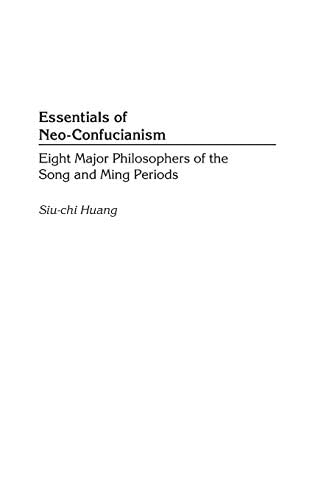
Essentials of Neo-Confucianism: Eight Major Philosophers of the Song and Ming Periods (Resources in Asian Philosophy and Religion)
Product details
| Management number | 232091300 | Release Date | 2026/06/18 | List Price | US$15.25 | Model Number | 232091300 | ||
|---|---|---|---|---|---|---|---|---|---|
| Category | |||||||||
Huang's book analyzes the major Neo-Confucian philosophers from the eleventh to the sixteenth centuries. Focusing on metaphysical, epistemological, and ethical philosophical issues, this study presents the historical development of the Neo-Confucian school, an outgrowth of ancient Confucianism, and characterizes its thought, background, and influence. Key concepts—for example ^Utai-ji (supreme ultimate), ^Uxin (mind), and ^Uren (humanity)—as interpreted by each thinker are discussed in detail. Also examined are the two major schools that developed during this period, Cheng-Zhu, School of Principle, and Lu-Wang, School of Mind. These schools, despite different philosophical orientations, were convinced that their common goal, to bring about a harmonious relationships between man and the universe and between man and man, could be achieved through different ways of philosophizing. To understand the Chinese mind, it is necessary to understand Neo-Confucianism as a reformation of early Confucianism.This analytical presentation of major Neo-Confucian philosophers, from the eleventh to the sixteenth centuries, examines Zhou Dun-yi (1017-1073), Shao Yong (1011-1077), Zhang Zai (1020-1077), Cheng Hao (1032-1085), Cheng Yi (1033-1107), Zhu Xi (1130-1200), Lu Xiang-shan (1139-1193), and Wang Yang-ming (1427-1529). With its focus on metaphysical, epistemological, and ethical philosophical issues, Huang's study presents the historical development of the Neo-Confucian school, an outgrowth of ancient Confucianism, and characterizes its thought, background, and influence. Key concepts—for example, ^Utai-ji (supreme ultimate), ^Uxin (mind), and ^Uren (humanity)—as interpreted by each thinker are discussed in detail. The two major schools that developed during these six centuries are examined as well. Lu-Wang, School of Mind, developed in criticism of Cheng-Zhu, School of Principle. The two schools, despite different approaches toward their philosophical pursuits, were convinced that their common goals, to bring about harmonious relationships between man and the universe and between man and man, could be achieved through different ways of philosophizing. To understand the Chinese mind, it is necessary to understand Neo-Confucianism as a reformation of early Confucianism.Scholars of Eastern religions and philosophy will appreciate the objective interpretations of each thinker's philosophy, for which pertinent passages spoken by each man have been selected and translated by the author from the original Chinese, and the comparisons of the Neo-Confucian philosophies with those of the West. An introduction provides the historical background in which to study the rise of Neo-Confucianism. The study is organized ehronologically and includes a glossary of terms and a bibliography which serves as a helpful guide for further research. Read more
| ASIN | B000PY3I8W |
|---|---|
| XRay | Not Enabled |
| ISBN13 | 979-8216080978 |
| Edition | 1st |
| Language | English |
| File size | 3.2 MB |
| Page Flip | Not Enabled |
| Publisher | Greenwood |
| Word Wise | Not Enabled |
| Print length | 280 pages |
| Accessibility | Learn more |
| Publication date | November 30, 1999 |
| Enhanced typesetting | Not Enabled |
Bestseller ranking
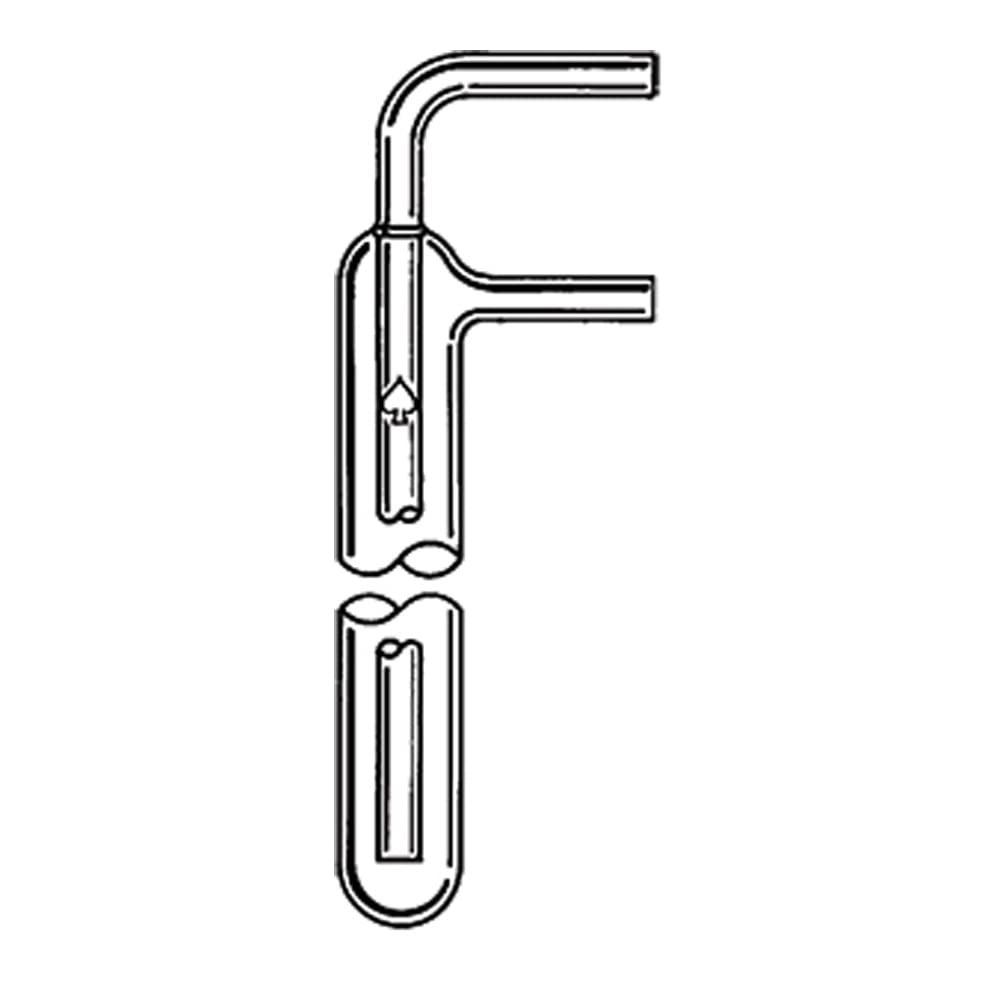
Cold Finger Condensers



Customers who viewed this product also viewed
Cultural & Ethnic Studies
![Multicultural Approaches to Health and Wellness in America: [2 volumes]](https://m.media-amazon.com/images/I/81nWZRSwwnL._SL1500_.jpg)


Correction of product information
If you notice any omissions or errors in the product information on this page, please use the correction request form below.
Correction Request Form